Pole Barn Site Prep in Wesley Chapel, FL: Grading, Drainage, and Pad Options Explained
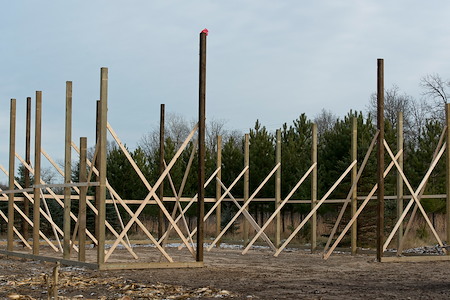
Solid pole barn site preparation in Wesley Chapel, FL starts long before the first post is set. Our area sees heavy summer rain, sandy soils, and occasional standing water. A well-planned pad, smart grading, and reliable drainage protect your building, your equipment, and your peace of mind. If you want a quick overview of building types and layouts, explore our pole barns to see how the foundation strategy supports the structure you choose.
Why Site Preparation Matters In Wesley Chapel’s Climate
Wesley Chapel sits on generally flat terrain with soils that can shift from sugar sand to pockets of clay. Summer thunderstorms hit fast. Without a stable pad and clear water path, you risk ruts, settlement, and moisture under the slab or inside the barn. Think of the site as a shallow bowl that you reshape so water flows out and the building sits high and dry.
For most properties in Seven Oaks, Meadow Pointe, Union Park, and around The Wiregrass area, the winning formula is simple: set the finished floor elevation above the surrounding grade, compact in layers, and give water a place to go. That approach reduces maintenance and keeps doors and equipment working smoothly after big storms.
Assessing Soil, Elevation, and Access
A professional crew from BARN DIRECT LLC begins with a walkthrough of the driveway approach, turning radius for delivery trucks, and any low spots holding water. We look at how the land currently drains and how the barn’s roof will change runoff patterns. We also note nearby trees, buried utilities, and the location of downspout discharges so the final grade does not backfeed water toward the pad.
Compaction is critical. Loose sand or fill will pump and settle under wheel loads. The right plan uses suitable base materials placed in thin lifts and compacted with proper moisture. Your finished surface should feel firm under foot and under tire, not spongy.
Grading For Positive Drainage And Flood Resilience
Good grading is quiet insurance. The goal is positive drainage in every direction with no pockets. Crews shape a gentle fall away from the building, often between 1 and 2 percent, so stormwater moves off the pad and into swales that daylight to a safe low area. The exact slope depends on soil and space, but the principle never changes: water should not pause near posts, splash walls, or door thresholds.
In subdivisions with tight setbacks or shared drainage, we design grading that respects property lines and existing flow paths. On rural lots, swales can be broader and shallower, which spreads water and slows erosion.
Local insight: Afternoon downpours in Pasco County can drop inches of rain in under an hour. Elevating your finished pad slightly above the yard and shaping clean swales often saves more headaches than deeper excavation. Schedule site work before peak rainy months when possible.
Pad Options: Gravel Pad vs. Concrete Slab
The pad is the working surface and the base for the building. In our region, two options dominate: a compacted gravel pad or a concrete slab. Each one performs well when built on the correct base and graded to move water away.
Compacted Gravel Pad
A layered gravel pad uses well-graded stone like #57 with fines or a limerock base, compacted in lifts over stable subgrade. The surface drains quickly, dries fast after storms, and is friendly to equipment tires. It is popular for agricultural storage, trailers, and barns that might change use in the future.
- Drains naturally and resists puddling when properly crowned.
- Flexible for future changes such as trenching or utility runs.
On soft subsoils, crews may install geotextile fabric beneath the base to separate stone from native sand and prevent pumping. Edge management matters too; tying the pad into surrounding grade reduces raveling at the borders.
Concrete Slab
A monolithic concrete slab creates a clean, hard surface for workshops, automotive work, and spaces that need easy rolling loads and sweepable floors. The slab still depends on a compacted base and proper drainage around the perimeter. In humid Florida, a vapor barrier under the slab can help manage moisture and keep floors drier.
- Ideal for finished interiors, tool benches, and precise equipment.
- Pairs well with roll-up doors and thresholds when the apron is graded correctly.
Whether you choose gravel or concrete, never trap water against the pad. Downspouts, splash blocks, and drain paths must carry water away and out to daylight.
Drainage Choices For Florida Storms
Roof runoff adds a lot of water to manage. A 30-by-40 roof can shed hundreds of gallons during a short storm. Gutters with directed downspouts can feed to shallow swales, drain rock trenches, or lawn areas that naturally slope away. Where space is tight, a French drain or a pipe to daylight can control discharge without washing out driveways or neighboring yards.
Plan roof runoff early. Setting downspout locations before the pad is finished helps crews grade the apron, add splash areas, and avoid backflow at doors. In sandy soils, infiltration can help, but in high-water-table pockets you may rely more on surface flow.
Compaction, Geotextile, And Base Materials
Stable foundations come from stable layers. On many Wesley Chapel sites, crews will scarify the subgrade, moisture-condition as needed, and compact to a firm platform. A non-woven geotextile separates native soils from new base when the subgrade is weak or variable. Then base stone is installed in thin lifts and compacted to lock the matrix together.
Common base choices include crushed concrete, limerock, and #57 stone with fines. The right pick depends on availability and intended use of the barn. Heavier equipment and point loads may call for thicker base layers. Talk with your builder about daily loads, turning zones near doors, and how trailers will back in and out.
Elevation, Thresholds, And Aprons
Set the finished pad slightly higher than the surrounding yard. This simple step keeps everyday splash and sheet flow out of your barn during pop-up storms. Door thresholds should meet the pad cleanly, and aprons outside roll-up doors need a smooth pitch away so water does not collect and track in. On gravel pads, a compacted apron of stone or a small band of concrete at high-traffic doors can prevent rutting.
If you plan to add interior finishes later, consider that now. Floor height affects wall panels, interior partitions, and how you route utilities.
Choosing Between Pad Types For Your Use Case
Use drives the decision. For hay, tractors, and general storage, a well-built gravel pad is durable and quick to dry. For auto work, woodworking, and hobby areas with cabinets and benches, a slab offers a cleaner environment. Many owners start with gravel and pour a slab in sections later once the layout is proven.
Looking at kit options too? When comparing layouts, materials, and roof styles, browse our pole barn kits to see how different footprints change drainage and pad size. The kit you choose should fit the access path for deliveries and align with the high spot on your property to minimize cuts and fills.
Access, Traffic Flow, And Turning Radii
Site prep includes the approach. Crews think about where loaded trucks will enter, back, and turn. The heaviest turning happens right outside your big doors, so that zone needs the best compaction. Consider how you will pull a trailer through the space on wet days. A little extra width on the apron often saves your yard from ruts.
For neighborhoods with narrow drives, we sometimes stage materials in a stable, nearby area and then bring smaller loads to the pad. That keeps heavy trucks off soft shoulders and avoids damage to irrigation near the curb.
Erosion Control And Clean Edges
After grading, crews stabilize disturbed areas so the first storm does not wash fines into your swales. Grass, mulch, or rock can protect slopes. On gravel pads, clean borders help keep stone where it belongs and make mowing easier. Where a pad meets an existing driveway, a smooth tie-in keeps water moving and prevents a tire-snagging lip.
It is also wise to plan a simple maintenance routine. After major storms, walk the site to confirm that water leaves as designed and that no new low points formed. Small touch-ups maintain long-term performance.
Timing, Weather Windows, And Scheduling
The best schedule balances ground moisture and forecasted rain. In late spring and early fall, soils often compact well and storms are less frequent. During the summer rainy stretch, windows can still work, but crews may stage work to protect the subgrade and finish surfaces between showers. Elevation beats excavation during rainy season because building up with stable base keeps you out of groundwater and standing water zones.
How BARN DIRECT LLC Handles Pole Barn Site Preparation
Our process is simple and thorough. We start with a property walk, discuss your goals, and evaluate drainage patterns. Then we design pad elevation, grading slopes, and water paths that fit your land and your barn size. We coordinate material delivery and compaction, set downspout points before final grading, and finish edges so the pad looks clean and performs under real-world use.
If you are still deciding on layouts or roof styles, reviewing our pole barns can help you picture door locations, apron widths, and where vehicles will move. As a local pole barn construction team, we build for Florida weather and the way you work every day.
What To Discuss With Your Builder Before Site Work Begins
- Intended use: storage, workshop, animals, or a mix.
- Expected loads: vehicle weights, jack points, and high-traffic zones.
- Drainage direction and where water will daylight safely.
- Roof runoff plan, gutter placements, and discharge points.
- Access route for deliveries and turning paths near big doors.
These topics help align the pad type, base thickness, and grading details with your goals. They also prevent surprises after the first major storm.
Your Next Step In Wesley Chapel, FL
If you want a straightforward plan that handles rain, wear, and daily use, BARN DIRECT LLC is ready to help. Learn how our pole barn site preparation approach fits your property, then talk with our team about timing and materials. For fast answers, call 352-942-0213 and let us map out the best elevation, pad, and drainage for your site.
When you are ready to build, our local crew makes the process simple from first grade cut to final apron. Speak with our pole barn construction specialists today to match the right pad and drainage to your goals in Wesley Chapel, FL. Reach out to our team for expert pole barn construction that is tailored to Florida weather and the way you work.
Let's Get Started
Contact Our Pole Barn Builders In Wesley Chapel Today!